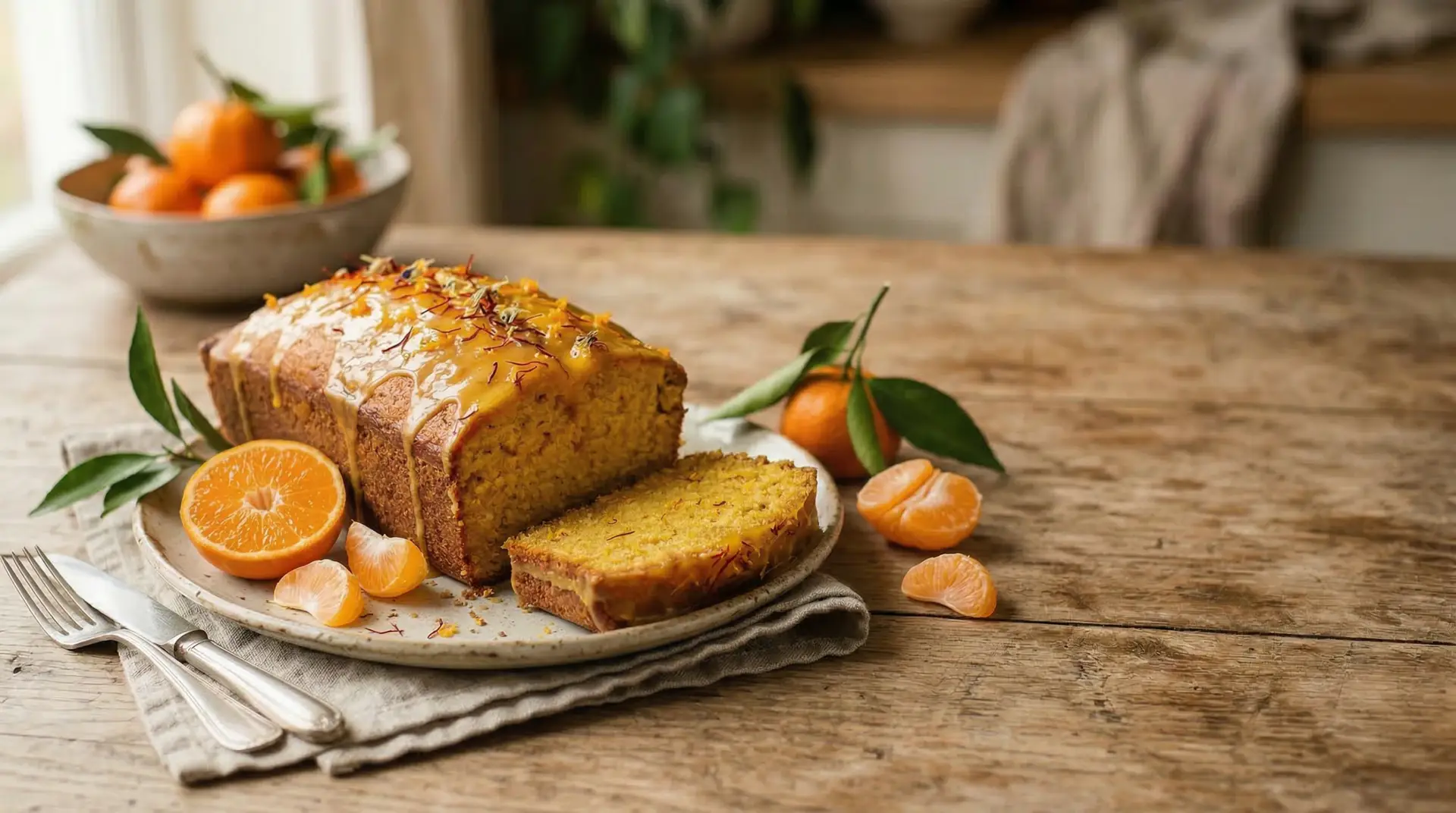
There is something quietly luxurious about citrus and spice together. A moist loaf scented with bright citrus and the floral warmth of saffron feels like a small celebration. The clementine and saffron loaf cake brings that idea to life with simple ingredients and a touch of patience. It is easy enough for a midweek bake and elegant enough for guests. In this post we’ll take a look at the cultural background, flavor notes, and a friendly approach to making this loaf.
Why clementine and saffron work together
Clementines are sweet, tender, and less acidic than other citrus. Their thin skins and fragrant oils blend seamlessly into butter and sugar. Saffron offers a delicate floral aroma with a honeyed warmth and a subtle earthiness. When you pair clementine zest and juice with saffron, you get bright top notes and a deep, lingering finish.
In many culinary traditions saffron appears in both sweet and savory dishes. It has a long history in Mediterranean and Middle Eastern baking. Adding saffron to a loaf cake links it to that heritage while keeping the result approachable. According to research saffron contains volatile compounds that contribute to aroma and perceived flavor, which explains why a small amount goes a long way.
Ingredients and cultural context
A classic loaf cake format crosses many cultures. The addition of saffron gives this cake a nod toward Persian and Andalusian sweets where the spice is prized. Using clementines instead of generic oranges adds a regional touch and highlights seasonal produce. Here is the ingredient list in practical terms.
For the cake you will need:
200 grams all purpose flour, 150 grams sugar, 120 grams butter softened, 3 large eggs, 2 clementines zested and juiced, 1 teaspoon baking powder, pinch of salt, 10 to 12 saffron threads soaked, 60 milliliters milk or yogurt for moisture. Optional: a simple syrup made from clementine juice and sugar to brush the loaf after baking for extra shine.
Soaking saffron threads in warm liquid releases color and aroma. Use the soaked liquid and a few threads in the batter. Reserve a few strands for garnish if you like. Learn more about saffron quality to choose threads that are deep red and aromatic rather than dull or broken.
Method and tips for success
Start by preheating the oven to 170 degrees Celsius and greasing a 9 by 5 inch loaf pan. While the oven warms, place the saffron threads in a small bowl with two tablespoons of warm milk or clementine juice. Let it bloom for at least ten minutes. This is where the spice opens up its aroma and color.
Cream the butter and sugar until light. Beat in the eggs one at a time. Stir in clementine zest and the saffron infused liquid. Fold in the flour mixed with baking powder and salt, alternating with the remaining milk or yogurt. The batter should be thick but pourable. Pour into the prepared pan and smooth the top.
Bake for about fifty to sixty minutes. Start checking at fifty minutes with a skewer. If it comes out with a few moist crumbs the loaf is ready. If it is still wet, test again after five minutes. Brush warm cake with the simple clementine syrup to keep it moist and add shine.
Tips that make a difference: use room temperature eggs for better emulsion, do not overmix once the flour is in to keep the crumb tender, and resist the urge to double the saffron. A little saffron goes a long way and keeps the flavor balanced with the citrus.
Serving suggestions and variations
This loaf is lovely warm with a simple dusting of powdered sugar or a thin glaze made from clementine juice and icing sugar. Try serving a slice with plain yogurt or a mild cheese to contrast the sweet floral notes. For a more decadent finish add a small drizzle of white chocolate infused with crushed saffron threads.
Variations include substituting part of the flour with ground almonds for a denser, more Mediterranean texture. You can also fold in a handful of chopped pistachios for crunch and color. For a dairy free option replace butter with coconut oil and use a dairy free yogurt.
Is saffron safe in baking?
Yes. Saffron is safe in culinary amounts. Use quality threads and avoid substitutes like safflower which lacks the same aroma. If you have specific allergies consult a medical professional.
Can I use other citrus instead of clementines?
Absolutely. Mandarin, satsuma, or sweet orange all work. Adjust sugar slightly if the fruit is tarter. Clementines are recommended because they tend to be sweeter and more aromatic, which complements saffron nicely.
How far in advance can I bake this loaf?
This cake stores well at room temperature for two days if wrapped. Refrigerate for up to five days. You can also freeze slices for up to one month. Thaw at room temperature and refresh in a warm oven if desired.
How much saffron should I use?
Ten to twelve threads soaked is a good starting point for this recipe. Saffron potency varies, so taste the batter aroma and adjust carefully. Too much saffron can overwhelm the subtle citrus.
This clementine and saffron loaf cake is simple to make. Give this recipe a try and let the aroma fill your kitchen. Its bright flavors are perfect for brunch, a thoughtful gift, or a quiet afternoon treat. If you enjoy this recipe, try other saffron bakings or explore savory uses to broaden your palate.