Saffron: Red Gold with a Story
Saffron earns its nickname “red gold” for good reason, its vibrant hue, intoxicating aroma, and healing qualities make it one of the world’s most coveted ingredients. Yet, every thread tells a story of labor, precision, and care.
A Labor of Love
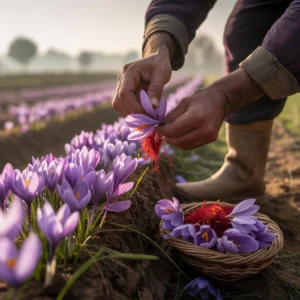
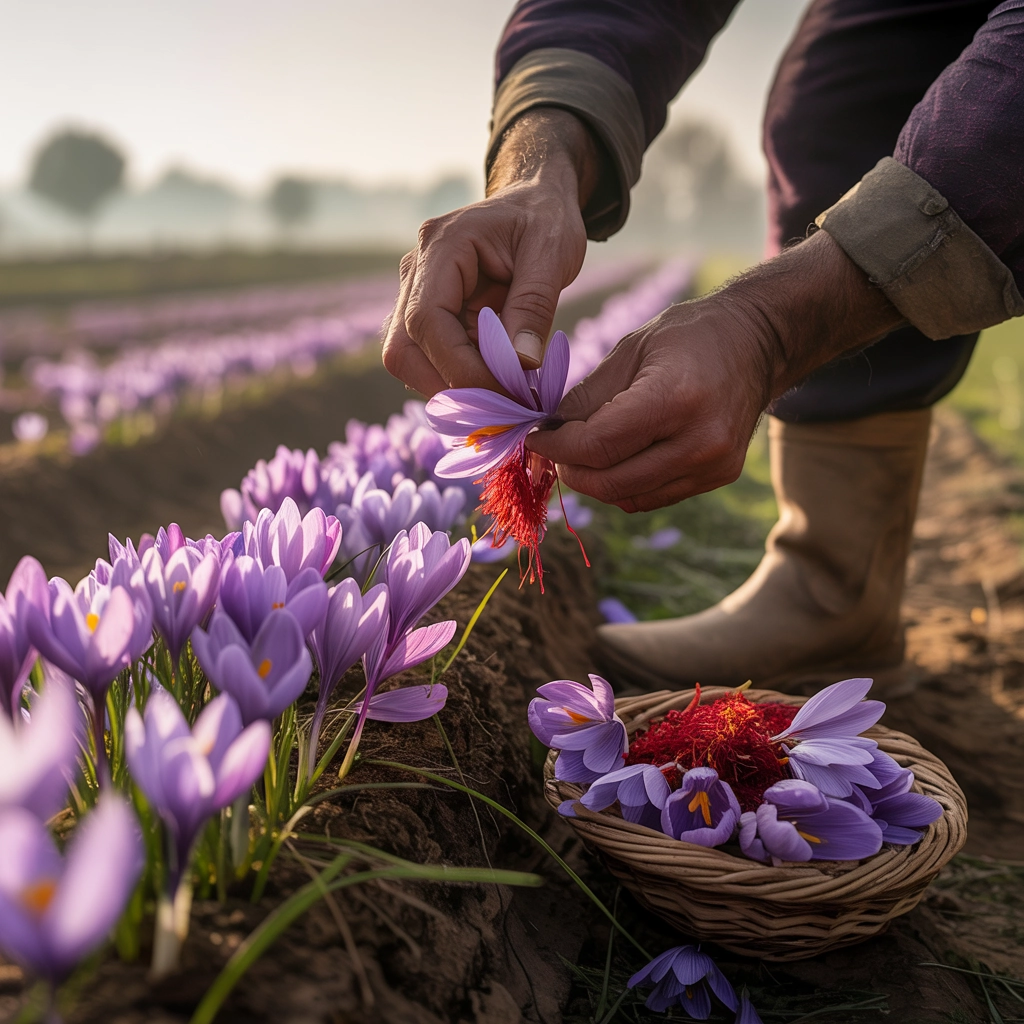
The Crocus sativus flower, which blooms just once a year for a few short weeks in autumn, produces saffron. Each flower yields only three red stigmas, and harvesters must pick them entirely by hand.
Harvesting starts early in the morning, when the flowers remain closed and the stigmas reach peak freshness. Skilled workers, often using tweezers or their fingertips, gently pluck the threads one by one, ensuring they remain undamaged. To produce a single kilogram of saffron, harvesters must gather about 150,000 flowers. Workers dedicate hours to this meticulous process, all within a tight seasonal window.
From Flower to Flame
After harvest, producers dry the stigmas, a delicate process that preserves color, aroma, and potency. They monitor temperature and timing closely; too much heat or moisture can ruin an entire harvest. Even packaging and storage demand attention to protect the threads from light and humidity.
The True Cost of Craft
Saffron stands apart from mass-produced spices because artisans handcraft it. Labor costs form a significant portion of its price, but so do the standards for quality: respect for the land, the harvesters, and the spice’s heritage.
So Why Is It So Expensive?
Because it must be.
Every gram of authentic saffron comes from a supply chain rooted in tradition, skill, and scarcity. Its high cost reflects what it truly takes: tens of thousands of flowers, expert handling, and a deep understanding of the plant’s rhythm.
When you choose real saffron, you do more than buy a luxurious ingredient, you invest in an ancient craft and honor the people who make it possible.