Saffron has been called “red gold” for centuries, prized for its aroma, color, and cultural meaning. In recent years, it has also become one of the most talked-about botanicals in the mental health and nutraceutical world.
A 2026 peer-reviewed literature review published in Cureus looks at what we actually know so far about saffron and depressive symptoms, including randomized controlled trials, meta-analyses, safety notes, possible mechanisms, and where clinical guidelines currently place it.
This post is a consumer-friendly summary of that review, with the nuance intact.
Why people are looking beyond conventional antidepressants
Depression is a leading cause of disability worldwide. Standard approaches like lifestyle changes, psychotherapy, and antidepressant medications help many people, but a meaningful minority either do not respond fully or struggle with side effects and adherence.
That gap is part of what’s driving interest in complementary options, including nutraceuticals.
What “saffron” means in research (and why it matters)
One of the most important points in the review is easy to miss.
Clinical studies have tested extracts from different parts of the Crocus sativus plant.
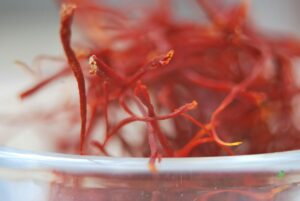
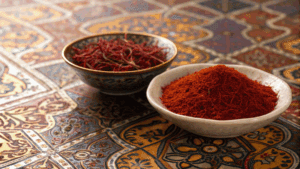
- The stigma is the culinary saffron spice most people recognize
- Some trials used petals instead
These plant parts have different constituent profiles, so results from petal-based products cannot automatically be generalized to stigma-based saffron supplements.
What the clinical trials suggest in mild-to-moderate depression
Across placebo-controlled randomized trials in adults with mild-to-moderate depression, saffron has been associated with meaningful reductions in depressive symptom severity.
Common study pattern
- Dose 30 mg per day
- Schedule often 15 mg twice daily
- Duration about six weeks
- Outcome measure frequently the Hamilton Depression Rating Scale (HAM-D)
In short, in the short term and in mild-to-moderate cases, saffron tends to outperform placebo.
How does saffron compare to antidepressants like fluoxetine
The review describes several small head-to-head trials comparing saffron with standard antidepressants.
- Compared with imipramine saffron showed similar symptom improvement, with imipramine causing more anticholinergic and sedating side effects
- Compared with fluoxetine saffron produced broadly similar improvements in small trials
There are also small studies in specific contexts such as postpartum depression and post–percutaneous coronary intervention populations.
Important caveat: These trials are generally small and short. They were not designed or powered to prove formal non-inferiority, and they do not answer long-term questions like relapse prevention or functional recovery.
Petal-based preparations: promising, but not interchangeable
A couple of trials looked specifically at petal extracts.
- In a placebo-controlled study, petal extract showed greater reductions in depressive symptom severity than placebo
- In another trial, petal extract and fluoxetine showed similar reductions over the treatment period
The review emphasizes caution here. Petals and stigmas are chemically distinct, so petal results should not be assumed to apply to stigma-based commercial products.
Saffron as an add-on to antidepressants
Because partial response is common, researchers have also tested saffron as augmentation.
- A randomized trial using a standardized extract (Affron®) as add-on therapy in adults with persistent symptoms on antidepressants showed greater improvement on clinician-rated symptoms versus placebo, though not all self-rated outcomes clearly separated
- A 12-week trial testing curcumin and a curcumin-plus-saffron combination found active treatments improved self-rated depression and anxiety versus placebo, but the combination did not clearly outperform curcumin alone
- A small pilot trial suggested crocin (a key saffron constituent) added to SSRIs improved symptoms more than placebo add-on
Overall, adjunctive evidence is encouraging but still early-stage.
What meta-analyses say (and the limits of confidence)
The review summarizes several evidence syntheses.
- A 2019 meta-analysis reported saffron reduced depressive symptoms versus placebo and also showed a large effect as an adjunct to antidepressants
- Meta-analytic evidence has found no significant difference between saffron and SSRIs in symptom reduction in the short term, with suggestions of fewer adverse events with saffron
- A 2025 network meta-analysis of nutraceuticals identified saffron among agents with potential benefit
At the same time, the review notes why we should be careful about overconfidence.
- Small sample sizes
- Short durations
- Restricted settings
- Variable product standardization and saffron source (stigma vs petal)
- Risk of bias and possible publication bias
Safety and tolerability: what’s known
In the depression trials summarized, saffron at 30 mg per day appears generally well-tolerated over the short term.
Commonly reported side effects
- Gastrointestinal upset
- Dizziness
- Headache
- Occasional mild sedation
The review also points to toxicology literature suggesting low acute toxicity at typical exposures, with potential harm at much higher doses (for example, grams rather than milligrams), and a lack of robust long-term human safety data.
It also flags real-world concerns common to supplements.
- Variable quality and standardization
- Potential adulteration
- Potential interactions, especially for people taking multiple psychotropic medications
- Extra caution in pregnancy and breastfeeding due to limited high-quality evidence
One additional finding is intriguing. A randomized trial reported saffron may improve SSRI-associated sexual dysfunction in women taking fluoxetine, which could matter for tolerability and adherence if replicated.
How saffron might work: the leading theories
The review describes several plausible mechanisms, with crocin, crocetin, and safranal most often implicated.
- Modulation of monoamine pathways (serotonin, dopamine, noradrenaline), including possible reuptake inhibition
- Antioxidant and anti-inflammatory effects
- Neuroprotective actions and reduced neuronal apoptosis
- Possible effects on glutamatergic signaling, acetylcholinesterase inhibition, stress pathways (HPA axis), and neuroplasticity (including BDNF-related pathways)
These mechanisms are biologically plausible, but they do not replace the need for larger, higher-quality clinical trials.
What guidelines say right now
The review cites CANMAT (Canadian Network for Mood and Anxiety Treatments) guideline updates that discuss saffron within complementary and alternative medicine options.
In that framework, saffron is positioned as:
- A third-line complementary option for mild-severity major depressive episodes
- A potential adjunct in moderate depression, rather than a replacement for first-line psychotherapy or antidepressant pharmacotherapy
The bottom line
Based on the 2026 review, saffron looks promising for short-term symptom reduction in mild-to-moderate depression, often at 30 mg per day for about six weeks, with generally favorable short-term tolerability.
But the evidence base is still limited. We need larger, longer, multi-center trials using standardized, chemically characterized preparations, with outcomes that matter in real life, including remission, quality of life, function, adherence, sexual side effects, and relapse prevention.
A gentle safety note
If you’re experiencing depression symptoms, you deserve support that’s personalized and safe. Botanicals can be helpful for some people, but they can also interact with medications and may not be appropriate in pregnancy or breastfeeding.
If you’re considering saffron supplementation, it’s worth discussing with a qualified clinician, especially if you’re already taking antidepressants or other mood-related medications.